Budweiser turned China's breakfast tables into World Cup watch parties
World Cup matches kicking off at 7 AM Beijing time posed a quiet problem: Chinese fans, who normally pack bars for late-night games, suddenly had nowhere to go.
World Cup matches kicking off at 7 AM Beijing time posed a quiet problem: Chinese fans, who normally pack bars for late-night games, suddenly had nowhere to go. Bars weren't open. So fans were left squinting at their phones on the subway, watching matches alone over a hurried
jianbing
.
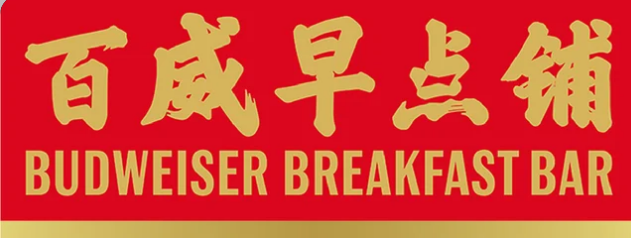
Budweiser saw the gap and made a move that feels obvious only in hindsight — it launched "Budweiser Breakfast Shop" (百威早点铺), turning morning kickoffs from an inconvenience into a social occasion.
Working with Shanghai-based creative agency FRED & FARID, the brand convinced partner bars to crack their doors open at dawn. Inside: big-screen match broadcasts, crowds that actually react to goals together, and a breakfast set built around Budweiser Zero — the brand's alcohol-free beer. The morning slot meant no one had to call in late to work.
But here's where the campaign scales beyond a handful of early-rising bars. Budweiser plugged the concept into over 11,000 breakfast-ready locations across the country. Partners included bakery chain Paris Baguette, Chinese breakfast brand Tao Yuan Village (桃园眷村), coffee chain NOWWA, and nightlife mainstays like Spoke, Shimmer, and Parlay — venues that normally wouldn't see a soul before noon.
For context, Budweiser has sponsored every World Cup since Mexico 1986. Its playbook has reliably revolved around night-time rituals: collectible can designs, bar takeovers, late-night delivery. This is the first time it's deliberately gone after mornings — a shift driven squarely by how match schedules landed for Chinese audiences this cycle.
The strategic layer is worth noting. The campaign creates something for three players at once. For fans, it rescues the communal watching experience that makes tournament football electric. For bars, it opens a revenue window that literally didn't exist before. And for Budweiser's non-alcoholic line, it plants the product in a scenario — breakfast, social, a reason to choose it — that feels native, not apologetic. That's a meaningful move in a market where alcohol-free beer is still searching for its everyday moment.
It's the kind of pivot that sounds simple but requires a brand to notice that its entire category rhythm is tied to one time of day — and then ask what happens when the most important event on its calendar ignores that rhythm entirely.