China’s biggest civil war is back: sweet vs savory zongzi
Today is Duanwu Festival, better known internationally as the Dragon Boat Festival.
Today is Duanwu Festival, better known internationally as the Dragon Boat Festival. The holiday dates back more than 2,000 years and is traditionally associated with Qu Yuan, a poet and statesman from ancient China. Dragon boat races, hanging herbs, and eating zongzi are all part of the celebration, but in modern China, one tradition has become especially important: arguing about what kind of zongzi is correct.
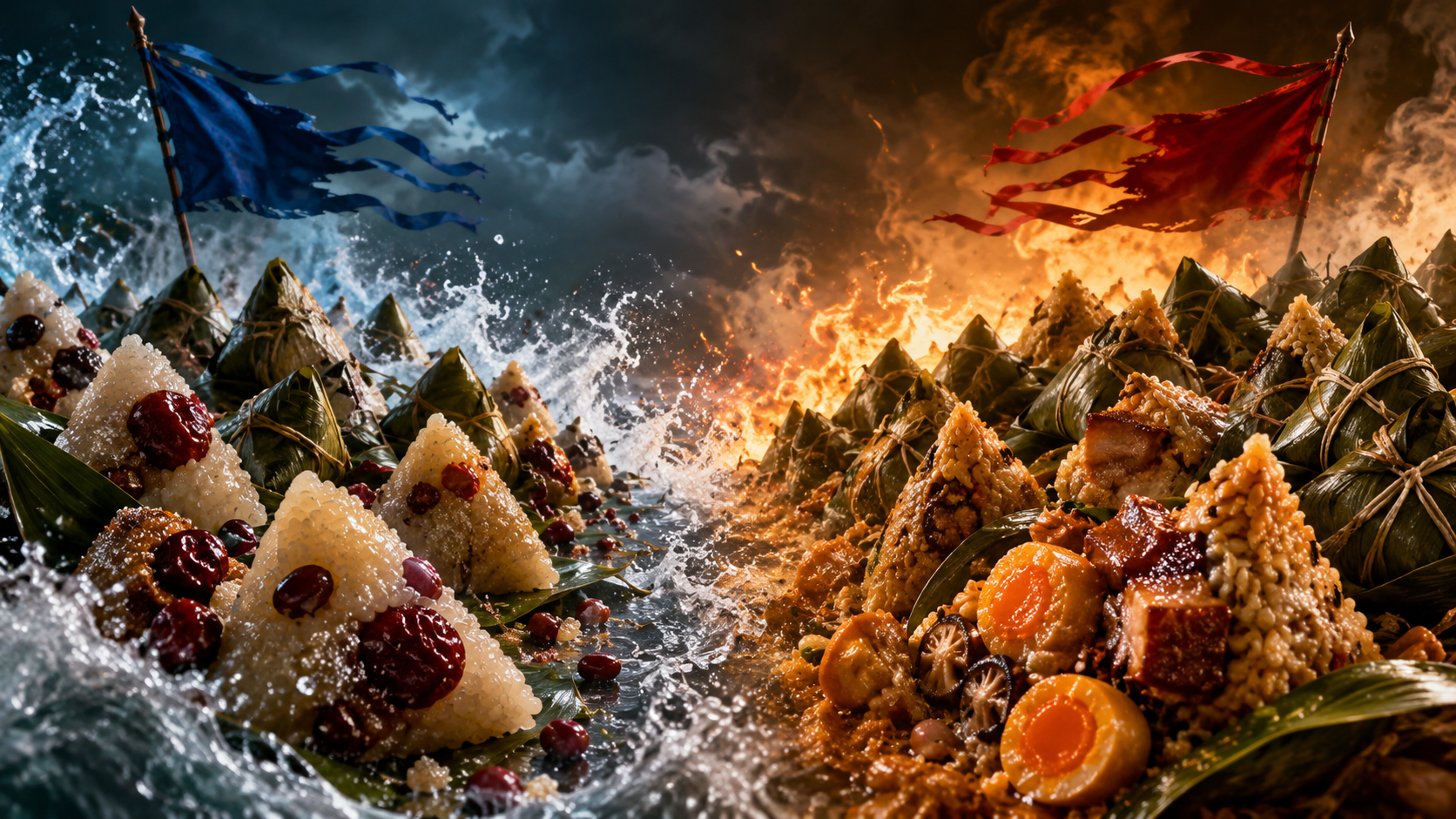
For the uninitiated, zongzi are sticky rice dumplings wrapped in bamboo leaves. Beyond that, things get controversial.
In many northern Chinese households, zongzi are sweet. Common fillings include red dates, red bean paste, and sweetened sticky rice. In much of southern China, especially Guangdong, Zhejiang, Jiangsu, and Fujian, zongzi are typically savory, packed with ingredients like pork belly, salted egg yolk, mushrooms, mung beans, and dried seafood.
Every year around Duanwu Festival, Chinese social media fills with memes, polls, and heated debates over which version is superior. While the argument is mostly playful, it also reflects how regional food culture remains deeply rooted in everyday life.
What has changed in recent years is how aggressively brands have embraced zongzi season.
Starbucks China, for example, partnered with the hit Chinese dance drama Poetic Dance: The Journey of a Legendary Landscape Painting, known in Chinese as Only This Green. The collaboration transformed its annual Star Ice Zongzi collection into a premium cultural gift set, complete with art-inspired packaging and flavors such as rose hawthorn, taro mochi, coconut, and fermented rice with mung beans. It is less a traditional holiday food product and more a lifestyle gift positioned somewhere between dessert, art merchandise, and seasonal collectible.
Even toy giant POP MART entered the zongzi market this year through its popular SKULLPANDA IP. The brand released themed gift boxes featuring SKULLPANDA artwork and both sweet and savory flavor assortments. The collaboration highlights a broader trend in China where entertainment IPs are increasingly expanding beyond toys and collectibles into food, beverages, and holiday gifting.
At the luxury end of the market, hotels have also discovered the commercial potential of zongzi. Shanghai's BVLGARI Hotel launched a premium Duanwu gift box inspired by the brand's DIVAS' DREAM collection, turning a centuries-old holiday snack into a luxury gifting experience.
Meanwhile, traditional players continue to dominate. Founded in Jiaxing in 1921, Wufangzhai remains China's most iconic zongzi brand. Its zongzi-making techniques were added to China's national intangible cultural heritage list in 2011, and for many Chinese consumers, the brand is still the default choice when buying holiday gift boxes.
Away from the marketing campaigns and premium packaging, Duanwu Festival remains a deeply community-oriented holiday. Across China, neighborhoods, schools, and local organizations host zongzi-wrapping competitions where residents gather to fold bamboo leaves, prepare fillings, and compare their wrapping skills. These events remain one of the most visible signs that despite all the commercialization, the festival is still very much alive at the grassroots level.
As for the sweet versus savory debate, there is still no winner. After all, nobody is really arguing about zongzi. They are arguing about hometown pride, childhood memories, and family traditions wrapped inside bamboo leaves.
And like every year, China will spend the holiday defending them with remarkable passion.
See the original on Instagram → @chinainsider