Hema Is Putting Indie Chinese Winemakers on 500 Supermarket Shelves
Walk into any Hema supermarket in China right now and you'll find something unusual in the wine aisle: a bottle with a winemaker's actual face staring back at y
Walk into any Hema supermarket in China right now and you'll find something unusual in the wine aisle: a bottle with a winemaker's actual face staring back at you.
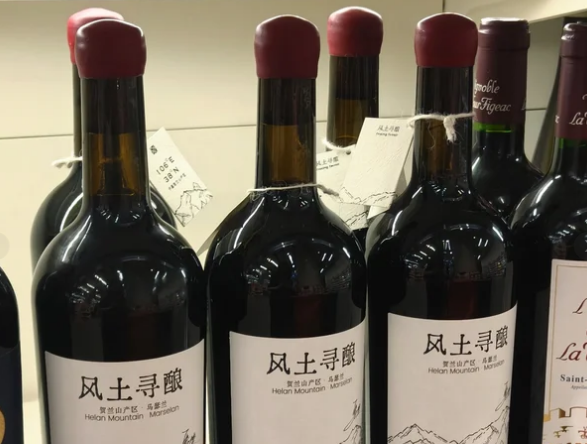
That face belongs to Ma Jie, an independent winemaker from Ningxia's Gezi Mountain (鸽子山) region. His 2023 Marselan — priced at ¥128 — is the opening act of Hema's new "Terroir Seekers" (风土寻酿) project, which launched quietly this month across 500 stores nationwide.
The setup is simple and unusually transparent. Each bottle follows a straight-to-the-point naming convention: "Terroir Seekers + Winemaker Name + Origin + Grape Variety." On the back label: the winemaker's portrait. No château mythology, no invented heritage. Just who made it, where it's from, and what's inside.
For China's small-scale independent winemakers, this is a genuine breakthrough. These are people who work harvest-to-bottle, adjusting technique to the year's climate rather than running an industrial recipe. They hand-pick grapes, sort berry by berry, and lean on light extraction and restrained oak to let the fruit speak. The problem has always been distribution — low yields and niche channels mean their bottles rarely escape the enthusiast circuit.
The Marselan at the center of this launch makes sense as a flagship. Marselan, a cross between Cabernet Sauvignon and Grenache, has been quietly emerging as a signature variety for Chinese wine regions. Ningxia's鸽子山 terroir — arid, high diurnal temperature swings — pushes grapes toward concentrated flavor without losing freshness. Ma Jie's version goes light on the barrel to preserve the grape's natural bright fruit character, landing somewhere between approachable and serious. It's a wine built for drinking, not collecting.
Hema's bet here is on timing. Chinese wine consumption is shifting — away from banquet-table status bottles and toward everyday drinking. People want personality and value, not just prestige. By putting independent-label domestic wine on mass-retail shelves at ¥128, Hema is essentially removing the two biggest barriers: obscurity and price.
There's also something quietly radical about the packaging choice. Sticking a winemaker's face on the label treats them less like a hidden supplier and more like a chef at an open kitchen. It's a small design move, but it changes the relationship between drinker and producer — especially in a market where "good wine" has long been code for "imported."
Whether the project scales remains the real question. Independent winemaking and mass retail don't naturally align — small batches can vanish across 500 stores. But if Hema commits to keeping the curation tight and the storytelling honest, "Terroir Seekers" could end up doing something more interesting than selling wine: making Chinese consumers care about
who
makes it.