The new AI phone StepX Neo wants to tap through apps for you
The new AI phone StepX Neo wants to tap through apps for you Most “AI phones” still work like regular smartphones with a chatbot added somewhere in the software
The new AI phone StepX Neo wants to tap through apps for you
Most “AI phones” still work like regular smartphones with a chatbot added somewhere in the software. StepX Neo is trying something more ambitious: putting an AI agent at the center of the phone and letting it operate apps, files and services on the user’s behalf.
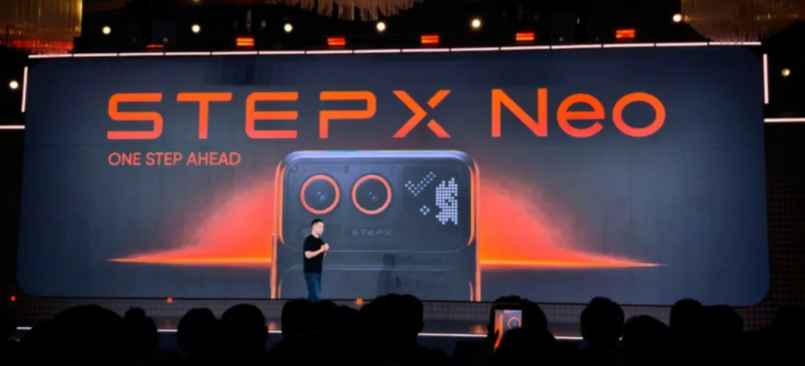
Unveiled in Shanghai on July 13, StepX Neo is the first device from STEPX, a new AI hardware brand created by Shanghai-based model developer StepFun. The company describes it as the world’s first large-model-native “agentic phone,” although it remains a prototype with no confirmed price or retail launch date.
StepFun was founded in April 2023 by former Microsoft Vice President Jiang Daxin and has become one of China’s prominent foundation-model startups. The company develops the Step family of large language and multimodal models, with capabilities spanning text, images, audio and video. Its models have also been integrated into products through partnerships with companies including OPPO and Geely. StepX Neo marks a bigger move: instead of supplying AI to other hardware makers, StepFun is now attempting to build and control the entire consumer experience itself.
At the center of the phone is Step AOS, what StepFun calls an “agent-native” operating system. It is not meant to replace Android entirely. Instead, it introduces an additional system layer designed specifically for AI agents, reorganizing computing power, data and software functions around what the agent needs to complete a task.
Traditional phone assistants can answer a question or launch an app, but they often struggle when a request involves a long chain of actions. Booking a trip, for example, might require searching destinations, comparing flights, reserving a hotel, arranging transport and completing payment across several apps. StepFun argues that its system can interpret the user’s overall intention, divide it into steps and allow the built-in personal agent, Amoo, to coordinate the process.
The important difference is that StepX Neo is not supposed to complete every task by simply watching the screen and imitating human taps. StepFun has announced partnerships with Alipay, Baidu, Meituan, JD.com, Didi, Ctrip, Amap, WPS and CapCut. According to Caixin, partner services can expose their functions to the agent through software protocols rather than forcing it to navigate the graphical interface like a human user.
That technical detail may be more important than the phone’s orange-and-black body or its dot-matrix rear display. AI agents that rely on simulated tapping can easily fail when a button moves, a pop-up appears or an app updates its interface. Direct access to approved service functions could make multi-app tasks faster and more reliable.
It also reveals the real challenge facing agentic phones. The winner may not simply be the company with the smartest model. It may be the company that can persuade enough apps, payment platforms and service providers to let an AI agent safely act inside their ecosystems.
That raises obvious questions about permissions, privacy and responsibility. A chatbot giving a bad restaurant recommendation is annoying. An agent booking the wrong hotel, sending a document to the wrong person or approving an unintended payment is a much bigger problem. StepFun says Step AOS is being designed around actions that are visible, controllable and reversible, and the company has worked with the Shanghai AI Laboratory on an agent-system safety framework.
StepX Neo has also passed L3 testing under China’s new national standards for grading AI terminals, currently the highest level available through open testing. The standard measures whether devices move beyond basic responses and tools toward more capable AI assistance, although certification does not prove that every real-world task will work perfectly.
For now, many practical details remain missing. StepFun has not announced the processor, battery capacity, full camera specifications, price or release schedule. The company says it will spend the next 100 days improving the ecosystem and adding compatible services and skills.
StepX Neo is therefore less a finished smartphone launch than a public argument about what comes after the app era. Instead of opening five apps and tapping through dozens of screens, StepFun wants users to state the result they need and let Amoo handle the digital paperwork.
The AI phone race is no longer only about who has the best chatbot. It is becoming a race to decide who — or what — gets to do the tapping.