Cursor's AI coding cafés are spreading across China
Cursor's rise over the past year has been one of the biggest stories in AI software.
Cursor's rise over the past year has been one of the biggest stories in AI software. Built by Anysphere, the AI-powered code editor has become a favorite among developers by combining large language models with a coding environment that can understand entire projects, write code, fix bugs, explain unfamiliar codebases, and even handle multi-step programming tasks. Instead of treating AI as a chatbot you occasionally consult, Cursor is designed to feel like an AI pair programmer that's constantly working alongside you. As "vibe coding" enters the mainstream, Cursor has quickly become one of the defining tools of the movement.
Now the company is taking the same philosophy offline.
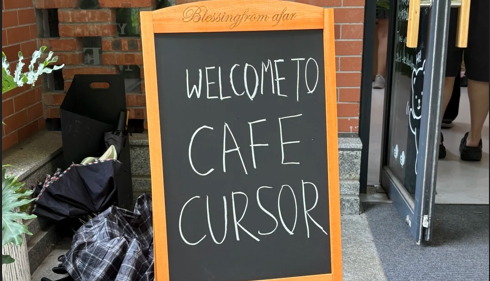
Over the past week, Cursor brought its global Cafe Cursor community series to China, hosting back-to-back events in Guangzhou, Shenzhen, and Hangzhou. Rather than booking conference halls or coworking spaces, the company rented neighborhood cafés and invited local developers to simply spend the day coding, talking, and meeting other people building with AI.
The format is intentionally minimal. There are no keynote speeches, no packed agenda, and no product demos. Attendees can drop in anytime, grab a free coffee and snacks, receive US$50 in Cursor credits, then spend the rest of the day however they like—working on personal projects, exchanging prompts, debugging code together, or discussing the latest AI models and developer tools.
Each city naturally developed its own personality. Hangzhou's event, held near Zhejiang University, attracted students, software engineers, product managers, and startup founders, with conversations revolving around how AI is changing software development and reshaping engineering roles. Some attendees shared that routine frontend work in their teams can now be completed with Cursor by backend engineers or even product managers, reducing the need for dedicated frontend specialists on smaller projects.
Shenzhen reflected the city's reputation as China's hardware capital. Alongside laptops were AI gadgets, embedded development boards, and hardware prototypes brought in by founders eager to exchange ideas. Discussions ranged from accelerating firmware development with AI to building AI agents and multilingual applications for cross-border businesses. Manufacturing technology managers even traveled from nearby cities such as Dongguan and Foshan to see how AI coding tools could improve factory software and industrial workflows.
The concept itself has already become a global community phenomenon. Cafe Cursor has expanded to more than 200 cities across over 80 countries, with more than 700 events held worldwide. The goal isn't to sell subscriptions on the spot. Instead, Cursor is betting that developers are more likely to adopt a tool when they're surrounded by other people already using it. The café becomes less of a venue and more of a local node in a global developer network.
It's a marketing strategy that feels very different from the traditional enterprise software playbook. Instead of product launches and polished presentations, Cursor is investing in community. As AI coding assistants become increasingly capable—and increasingly similar on paper—the companies that build the strongest ecosystems may have an advantage that's much harder for competitors to copy. If the recent China events are any indication, developers seem more than happy to trade conference badges for coffee cups.