The hottest part of Shanghai’s giant AI expo WAIC is hidden in the basement
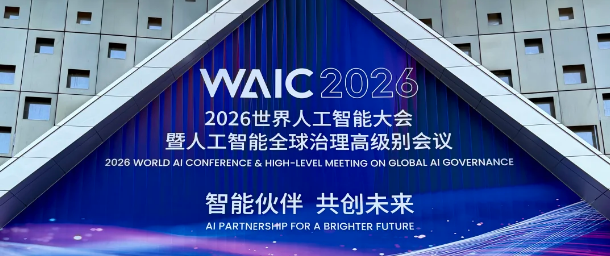
Shanghai’s World Artificial Intelligence Conference is designed to overwhelm visitors with scale.
Shanghai’s World Artificial Intelligence Conference is designed to overwhelm visitors with scale. The ninth edition of WAIC, running from July 17 to 20, stretches across the Shanghai World Expo area, Zhangjiang and the West Bund. It brings together more than 1,100 companies, over 3,000 exhibits and more than 300 global product debuts across a record exhibition area exceeding 100,000 square meters. Nearly 140 forums cover everything from computing infrastructure and embodied intelligence to academic research and global AI governance.
The main Expo venue is effectively a physical map of China’s AI industry. H1 focuses on applications and commercial ecosystems, H2 on computing power and infrastructure, H3 on robotics and embodied intelligence, while the underground H4 hall is dedicated to startups and experimental projects. Major exhibitors include Huawei, Alibaba, Tencent, Baidu and JD.com, alongside model developers such as MiniMax, StepFun, Moonshot AI and SenseTime, chip companies including Moore Threads and Enflame, and robotics leaders such as Unitree Robotics, AgiBot and Fourier Intelligence.
The headline products upstairs are built to look like major industry milestones. Huawei is publicly displaying its Atlas 950 SuperPoD AI computing system, while MiniMax is presenting its M3 multimodal model. StepFun has brought its agent operating system and StepX Neo, an “agentic phone” designed to complete tasks instead of simply answering questions. Unitree’s booth includes the GD01, a 2.8-meter-tall piloted machine that can switch between humanoid and four-legged forms, while AgiBot is presenting new robots and industrial deployment scenarios.
Robots are not only standing behind barriers this year. Around 60 humanoid robots have been deployed across WAIC as guides, information assistants and reception staff, with some switching between Chinese and English or navigating visitors through the venue. Other robots are demonstrating pharmacy picking, retail service, factory work, emergency inspection and food preparation. The shift is clear: the industry wants visitors to stop asking whether a robot can dance and start asking whether it can survive an actual workday.
WAIC’s expansion beyond the main Expo halls also gives the event a more citywide identity. Zhangjiang focuses heavily on chips, computing infrastructure and technical competitions, including robot fighting and robotic-dog racing. The West Bund venue is positioned as the more consumer-facing “life” section, where visitors can try AI devices, entertainment products and everyday applications rather than only viewing industrial systems.
Yet despite the giant machines, famous logos and heavily produced booths upstairs, one of the most talked-about parts of WAIC is hidden below them.
The H4 Future Tech hall, located on the basement level of the Expo venue, brings together 158 early-stage startups and 22 OPC projects selected from roughly 1,200 applicants. OPC stands for “one-person company,” although the concept is less about literally employing one person forever and more about founders using AI to handle work that once required a much larger team. The projects span industry applications, infrastructure, intelligent devices and frontier technology, with pitch stages, developer talks and investor-matching areas built directly into the hall.
The atmosphere is noticeably different. Instead of multi-storey installations and scripted demonstrations, H4 is packed with smaller booths where founders and developers often explain the products themselves. Visitors can see unfinished hardware, ask highly specific questions and hear the awkward but honest story of how an idea became a prototype. It feels less like a corporate exhibition and more like a crowded technology market where everyone brought the thing they built last month.
Some of those ideas are unusually specific. The “Have You Blow-Dried?” robotic arm can hold a hair dryer, toothbrush or electric shaver to assist with bathroom routines. A brain-controlled wheelchair allows users with mobility impairments to issue basic commands through brain signals. Other booths feature AI presentation software with millions of users, legal tools already serving large corporate clients, sleep-focused hardware and small SaaS products helping Chinese factories find overseas customers. Xiaohongshu also gave six independent booths to young developers from its hackathon community, including the creators of the wheelchair and bathroom robot arm.
Even the company names feel less boardroom-approved. Booth signs photographed at the event include AfterZero, Shanghai Super Vibe Technology and Shanghai Beautiful Pig Technology. Another company’s Chinese registered name roughly translates as “Shanghai I Don’t Care Technology,” although its displayed English name is considerably more conventional.
The names are funny, but they also fit the mood of the startup area. These companies are not yet trying to sound like century-old institutions. Many are built by recent graduates, independent developers or founders who grew up naming accounts, online communities and side projects before naming companies. At H4, the branding can feel closer to a social media username than a consulting firm.
That informality is part of why the basement is resonating online. Large AI exhibitions have become very good at presenting maximum scale: larger models, denser computing clusters, taller robots and brighter screens. H4 offers the opposite kind of appeal. Its projects often start with a tiny, almost oddly personal question: Can a robot dry my hair? Can AI help a small factory find buyers? Can someone control a wheelchair without moving their hands?
There is also a serious business shift underneath the playful presentation. China’s earlier AI startup wave was dominated by companies trying to build their own foundation models. At WAIC 2026, many smaller teams are instead building on top of existing models and targeting narrow workflows where customers may actually pay. They are competing less on parameter counts and more on distribution, proprietary data, industry knowledge and access to a specific group of users.
That strategy is not automatically safe. As models improve, a startup’s entire feature can be absorbed into a platform update. Investors and founders discussing OPCs at WAIC warned that small companies need to avoid areas where the model itself can quickly provide a standard answer. The more defensible opportunities may lie in workflows requiring specialized knowledge, taste, trust, physical hardware or deep customer relationships.
The contrast between WAIC’s upper and lower levels therefore says more than the viral photos suggest. The major companies upstairs are building the infrastructure, models and machines that define the current AI market. The founders downstairs are testing what ordinary people and businesses might actually do with them.
Upstairs has Huawei, Unitree and multimillion-dollar robots. Downstairs has a machine that helps you brush your teeth and a company called Beautiful Pig Technology.
For understanding where AI is going, Shanghai may need both.