Starbucks Turned Its Beijing Flagship Into a 'Sloppy Reading Club' With Novelist Yu Hua
Starbucks just gave its Beijing flagship a makeover that has nothing to do with new syrups and everything to do with one of China's most unflinching literary vo
Starbucks just gave its Beijing flagship a makeover that has nothing to do with new syrups and everything to do with one of China's most unflinching literary voices.
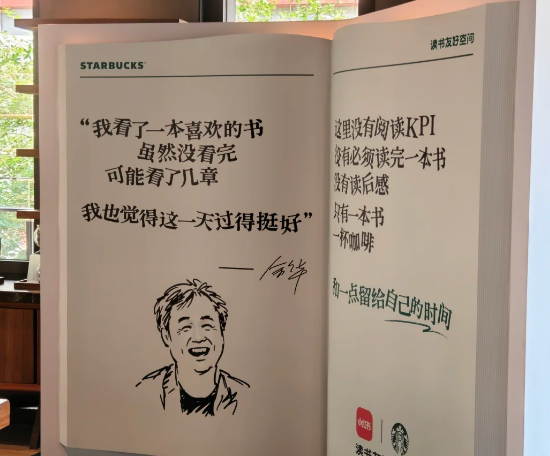
This summer, the Starbucks Reserve store at Beijing Fun — its high-profile flagship in the capital — was transformed into a "潦草读书局," which translates roughly to "Sloppy Reading Bureau." The collaborator behind it: Yu Hua, the novelist whose book
To Live
(活着) is one of the most widely read and emotionally devastating works in modern Chinese literature. The partner publisher: New Classics Culture (新经典文化).
The concept riffs on Yu Hua's own "潦草" (sloppy, unpolished) life philosophy. The store now features quote installations, a curated book list, and reading corners where customers can flip through the same titles Yu Hua recommends. His handwritten quotes appear on co-branded canvas tote bags, reading cards, and other merchandise — the kind of literary ephemera that feels more indie bookstore than global coffee chain.
But the Beijing flagship is just the headline act. Starbucks has simultaneously rolled out 150 "Reading-Friendly Spaces" across China, each with a free borrowing zone and plans for regular reading events. The broader "Interest Community Space" program — which already includes zones built around pets, crafts, cycling, and running — has now expanded to nearly 2,400 stores nationwide. A music fan space was also added in this refresh.
Why this matters: Starbucks has been defending its "third space" identity in China for years, but the pressure has intensified. Luckin and other delivery-first competitors have eaten into the functional coffee run, while independent shops have claimed the aesthetic and cultural ground. Partnering with Yu Hua — a literary figure who bridges generations, from post-Cultural Revolution readers to young people discovering him through Douyin clips and university reading lists — is a specific kind of flex. It says:
we're not just a place to work; we're a place where culture happens.
There's also something quietly radical about the pairing. Yu Hua's most famous novel is a brutal, unsentimental story of suffering and endurance under China's 20th-century upheavals. This is not aspirational lifestyle content. Choosing his voice over a safer, more decorative literary figure suggests Starbucks is betting that young Chinese consumers — often stereotyped as distracted and screen-addicted — actually want spaces that take their inner lives seriously.
Whether a chain coffee shop can genuinely become a reading sanctuary is an open question. But when 1,500 stores are putting bookshelves next to the espresso bar, someone is paying attention to the answer.