Liuyuexian Turns Shanghai Metro Windows Into an Apron Fashion Showcase Tied to Real Life Stories
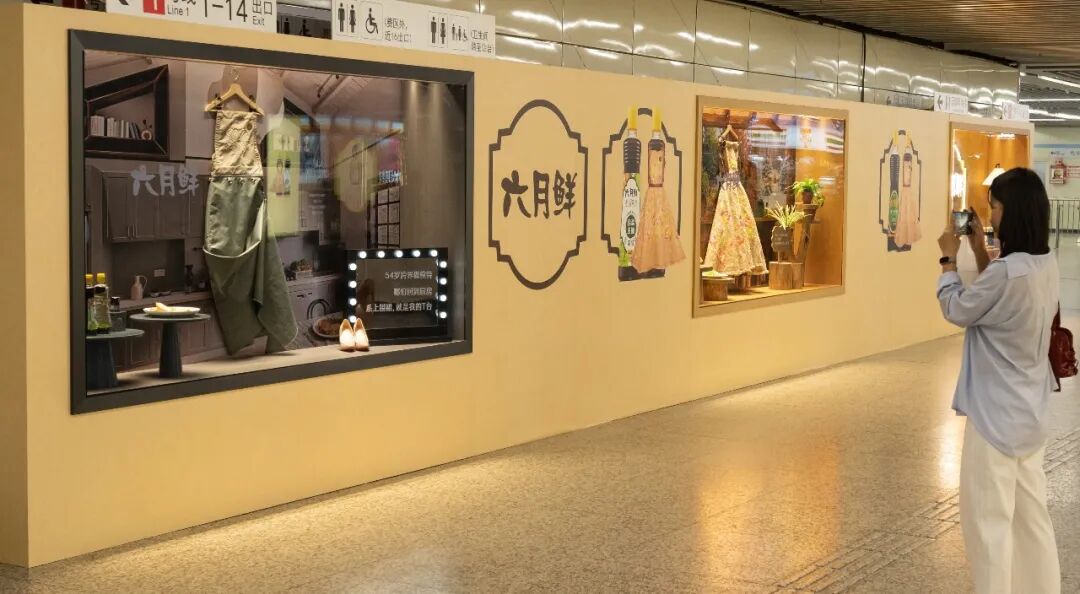
Liuyuexian displayed five styled kitchen aprons in Shanghai Metro Xujiahui station light boxes on September 22, each paired with a real person's life story.
Liuyuexian (六月鲜), a soy sauce brand that has built a decade-long narrative around kitchen aprons, mounted a window display installation at Shanghai Metro's Xujiahui station interchange corridor on September 22, 2026. Five aprons, each in a distinct style, were placed in metro light-box windows, and each was paired with the real story of the person who inspired it.
The five pieces span a wide register of aesthetics and lives. A raw wood natural apron embroidered with seasonal flowers belongs to a woman who restarted her life beside Sailimu Lake in Xinjiang. A pink apron bearing a sun totem design is tied to a male artist who uses his home as a canvas. A silver-grey attic apron with sharp tailoring is linked to a 54-year-old Shanghai woman who became a model. A white French-style apron, described as elegant and light, accompanies a woman living in the Wukang Building (武康大楼). A coffee-coloured castle apron with a pure black retro aesthetic is matched to a soft-furnishings designer who turned a childhood dream of castles into her reality. Collaborators on the campaign include food writer and cultural personality Ouyang Yingji (欧阳应霁), Wen Haotian (文昊天), Tang Yan (唐彦), and fashion designer HELEN LEE.
The installation is framed by three slogans from the brand: "Cook beautifully too," "Reclaim the kitchen's dignity," and "Who says an apron can't go out on the street." The campaign draws on more than ten years of apron-centred brand storytelling: Liuyuexian released its first fashion apron collaboration in 2015, followed by a Spring Festival apron in 2016 and a non-heritage-inspired apron design in 2019.
By placing kitchen aprons inside metro light boxes — a format typically reserved for fashion, luxury and entertainment advertising — the brand makes a direct argument that functional cookware accessories belong in the same visual conversation as fashion pieces.
The choice of a metro interchange — one of Shanghai's highest-footfall transit nodes — as an exhibition space reflects a broader appetite among Chinese consumer brands for treating public infrastructure as a gallery. For a condiment brand, claiming the visual vocabulary of a fashion installation is a deliberate repositioning play: it argues that the kitchen, and what you wear in it, carries cultural and aesthetic weight equal to what you wear outside it.