Lao Gan Ma now comes in shrimp crackers and potato chips
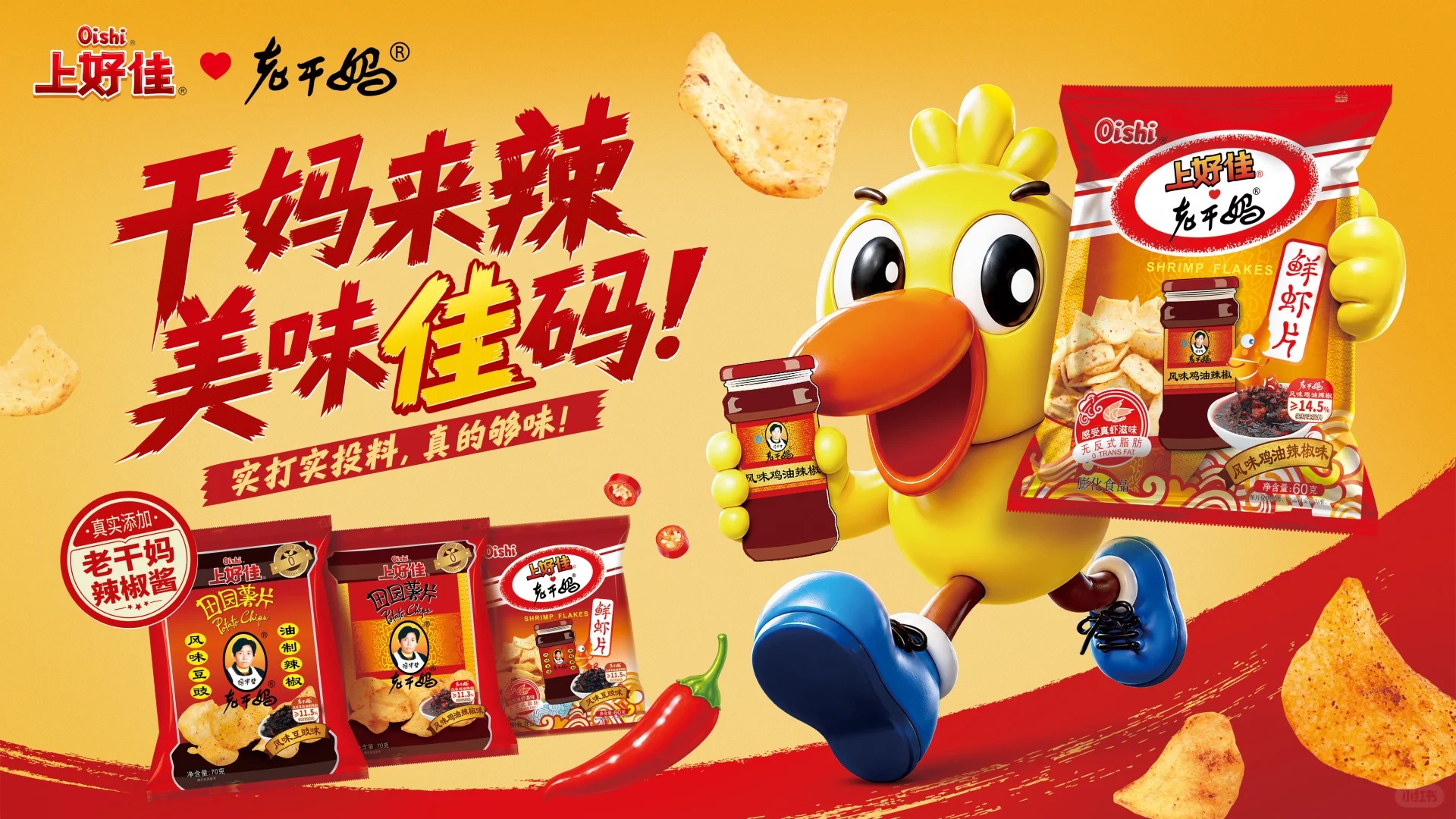
Oishi has teamed up with Lao Gan Ma to turn one of China’s most recognizable chili sauces into two convenience-store classics: shrimp crackers and potato chips.
Oishi has teamed up with Lao Gan Ma to turn one of China’s most recognizable chili sauces into two convenience-store classics: shrimp crackers and potato chips.
The collaboration began with a relatively cautious rollout. Oishi announced the partnership in late May and introduced Lao Gan Ma–flavored shrimp crackers at FamilyMart stores across China on June 1, supported by an in-store add-on promotion. After more than a month of consumer testing and social-media reviews, the company expanded the line with Lao Gan Ma–flavored ridged potato chips. Oishi officially announced the full collection on July 20 under the campaign slogan “Gan Ma Lai La,” a play on Lao Gan Ma’s name that roughly translates to “Godmother is here to bring the heat.”
Both products are based on Lao Gan Ma’s classic fermented black bean chili flavor. Their seasoning contains at least 11.5% chili-and-black-bean sauce, designed to recreate the salty, fermented and mildly spicy profile associated with the original condiment.
The two formats offer noticeably different experiences. Oishi’s 60-gram shrimp crackers are light and airy, combining the brand’s familiar seafood base with a layer of chili sauce flavor. The 80-gram ridged potato chips are thicker and more substantial, allowing the potato, fermented black beans and savory seasoning to come through more strongly.
For anyone unfamiliar with Lao Gan Ma, this is not simply another hot sauce licensing deal.
Founded by Tao Huabi in Guizhou, Lao Gan Ma has grown from a local chili condiment into one of China’s most recognizable food brands. Its sauces are used on rice, noodles, dumplings, vegetables, eggs and almost anything that needs an emergency flavor upgrade. For students, office workers and people who are not especially confident in the kitchen, one spoonful can function as an entire cooking strategy.
Its packaging has also become part of the brand’s cultural power. The red label and Tao Huabi’s serious portrait are instantly recognizable in China, where the image has inspired memes, clothing, accessories and countless unofficial designs. Unlike many contemporary food brands, Lao Gan Ma did not need a cute mascot or a minimalist rebrand. It already had the sternest and perhaps most trusted face in the condiment aisle.
The brand’s popularity has also moved well beyond Chinese communities. Lao Gan Ma has developed a loyal following among international chefs, home cooks and online food creators, who use it in everything from noodles and sandwiches to pizza, pasta and even ice cream. Chinese media and company representatives have described the brand as a calling card for Chinese food culture, while overseas social platforms continue to generate unconventional recipes and organic promotion around it.
That cultural recognition is what makes the Oishi collaboration more effective than the average limited-edition flavor.
Oishi is not introducing consumers to an unfamiliar ingredient or relying entirely on novelty. It is combining two products already linked to everyday snacking in China: its classic shrimp crackers and potato chips, and a chili sauce many households already keep in the kitchen. The surprise comes from seeing those familiar products merged into one bag.
The rollout strategy also allowed Oishi to build the collaboration gradually. Launching the shrimp crackers first created an initial wave of curiosity without requiring a full product-line commitment. Once consumers had begun posting taste tests and reviews, the potato-chip version extended the conversation and gave the campaign a second release moment.
The packaging completes the idea. Both bags borrow Lao Gan Ma’s signature red background and founder portrait, giving them immediate shelf recognition. From a distance, they look almost like someone flattened a jar of Lao Gan Ma and placed it in the chips section.
Consumer reactions have been divided, which is often useful for a collaboration built around curiosity. Some chili-snack fans say the fermented bean flavor is surprisingly accurate and more substantial than expected, while others find the sauce profile unusual when transferred from a spoonable condiment to a dry snack. Either way, the products give people something specific to debate rather than simply another celebrity logo printed on a package.
For Oishi, the partnership refreshes two established snack categories without abandoning the products consumers already know. For Lao Gan Ma, it extends the brand from the condiment shelf into ready-to-eat snacking while keeping its most recognizable flavor and visual identity intact.
Lao Gan Ma used to be what people added to their chips. Now Lao Gan Ma is the chips.