Haaland is now selling Chinese herbal tea, and the ad is ridiculously catchy
Haaland is now selling Chinese herbal tea, and the ad is ridiculously catchy Erling Haaland has become the global brand ambassador for WALOVI, the international
Haaland is now selling Chinese herbal tea, and the ad is ridiculously catchy
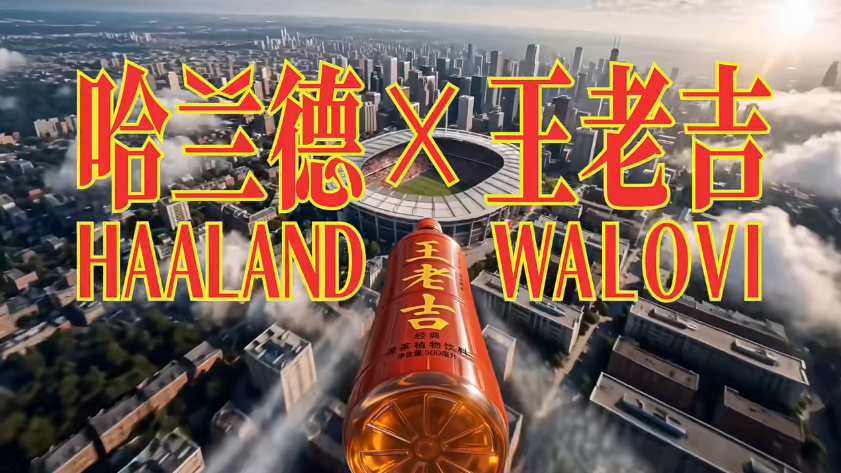
Erling Haaland has become the global brand ambassador for WALOVI, the international-facing brand of Wang Lao Ji, one of China’s most iconic herbal tea drinks. The partnership looks strange at first: a Norwegian football superstar, a red can of Chinese herbal tea, Mandarin slogans, barbecue scenes, and a remixed fan chant that sounds engineered to live rent-free in your brain.
But the campaign is more calculated than the absurdity suggests.
Wang Lao Ji is not just trying to buy attention through a famous athlete. It is trying to solve a much harder marketing problem: how to globalize a beverage category that is instantly understood in China, but far less obvious overseas. In China, Wang Lao Ji is strongly tied to the idea of “shanghuo,” often translated loosely as “getting heaty.” It is the kind of thing people talk about after spicy hotpot, barbecue, late nights, dry weather, or too many fried snacks. The brand’s classic slogan, “怕上火,喝王老吉,” works because Chinese consumers already understand the need-state behind it.
Internationally, that shortcut does not exist. “Chinese herbal tea” can sound niche, medicinal, or like something you buy once out of curiosity at an Asian supermarket. WALOVI’s job is not only to introduce a product, but to create a drinking occasion. That is where the Haaland campaign becomes smart.
Instead of explaining herbal wellness in a serious, educational way, WALOVI translates the brand promise into a universal summer scene: football, heat, friends, barbecue, late-night watching, and the need for something cold and refreshing. The campaign does not ask global consumers to fully understand “shanghuo” on day one. It gives them a simpler entry point: when things get hot, intense, spicy, or sweaty, drink this.
Haaland is doing more than posing with a can. He acts as a cultural shortcut. On the pitch, he is known as a cold, efficient scoring machine. In the ad, he breaks that image completely: speaking Mandarin, joining goofy scenes, and leaning into a chant built around “ha ha ha Haaland.” The contrast matters. A polished celebrity endorsement would have made the campaign look expensive but forgettable. This version gives people a reason to share it: it is weird, funny, and just self-aware enough.
The song is also doing serious work. By remixing Haaland’s existing fan culture into a brand asset, WALOVI avoids building a campaign language from scratch. Football fans already associate Haaland with chants, exaggerated reactions, and meme clips. The brand simply inserts itself into that behavior. Once the hook is easy to repeat, the campaign stops depending only on paid media. People can hum it, remix it, joke about it, request a one-hour loop, or use it as background audio for their own “football plus barbecue plus Wang Lao Ji” content.
That is the strongest part of the campaign: it turns the product into a ritual instead of just an ad prop. “Football match + barbecue + Wang Lao Ji” is not a random scene; it is a direct attempt to own a summer consumption moment. In China, Wang Lao Ji has long benefited from pairing itself with hotpot, spicy food, and gatherings. WALOVI is now trying to stretch that logic into a more global sports-viewing context. The World Cup gives the brand a perfect window: people are already watching games together, eating late, drinking cold beverages, and posting the whole thing online.
The rollout also shows how Chinese brands are getting more fluent at cross-platform hype-building. Haaland joining Weibo, following Wang Lao Ji, teasing fans, and then announcing the partnership on Instagram created a trail for Chinese netizens to decode before the official reveal. That breadcrumb effect is important. It made the campaign feel less like a press release and more like an internet event people “discovered” together.
For Wang Lao Ji, WALOVI is not simply an English name slapped onto an old Chinese product. It is an attempt to repackage a deeply local wellness habit for international pop culture. The brand keeps its Chinese identity visible — the Mandarin line, the red can, the “beat the heat” logic — but wraps it in football, music, humor, and meme circulation.
That is a much better globalization strategy than pretending the product is culturally neutral. The point is not to make Wang Lao Ji feel less Chinese. The point is to make its Chineseness easy to understand, easy to repeat, and easy to post.
And if people walk away remembering the song before they fully understand the drink, that may not be a weakness. For a heritage beverage brand trying to enter younger global conversations, the first battle is not education. It is attention. WALOVI got Haaland to deliver that in the loudest, strangest, catchiest way possible.
See the original on Instagram → @chinainsider