What if a shopping mall felt more like an art museum and a nature park? Cultural Icon Adrian Cheng has an answer
From bringing Monet masterpieces into shopping malls to connecting luxury retail with a natural wetland, Hong Kong entrepreneur Adrian Cheng has spent nearly two decades rethinking what shopping spaces can be. His latest project in Xiamen might be his most ambitious interpretation yet.
Imagine walking out of a subway station, spotting a giant lobster sculpture, exploring an art exhibition, grabbing a coffee, and then taking a stroll through a wetland park.
That might sound like an unusual weekend itinerary, but it's exactly the kind of experience Adrian Cheng wants to create.
The Hong Kong cultural icon and founder of K11 has built his reputation around a simple question: what if shopping malls offered people more reasons to visit than shopping?
His latest answer is Xiamen K11 Select, which opened on September 22, 2026, in China's coastal city of Xiamen. Located beside Wuyuan Bay Wetland Park, the new destination brings together art, fashion, dining, public transportation, and nature in a single development.
But to understand why Cheng is bringing a shopping mall closer to a wetland, you have to go back to where his experiment began.
The man who brought art into shopping malls
When Cheng introduced the first K11 Art Mall in Hong Kong in 2009, mixing contemporary art with commercial retail was still a pretty unconventional idea.
Shopping malls were traditionally built around stores, restaurants, and the occasional entertainment venue. Cheng imagined something different: a place where people could encounter art as part of their everyday lives, even if they had no plans to visit a museum.
The concept gained international attention in 2014, when Shanghai K11 hosted mainland China's first major Claude Monet exhibition, bringing masterpieces by the French Impressionist into the basement of a shopping mall.
It was an unexpected setting for fine art, but that was precisely the point.
Instead of asking people to make a special trip to a traditional museum, K11 brought the museum experience to somewhere they were already spending time.
The idea continued to evolve.
In 2019, Cheng unveiled K11 MUSEA along Hong Kong's Victoria Harbour, combining luxury retail with public art, elaborate architecture, cultural exhibitions, and green spaces. The wider Victoria Dockside development was shaped by more than 100 international architects, artists, designers, and environmentalists through its "100 Creative Powers" initiative.
Cheng envisioned Victoria Dockside as a Cultural District and a "Silicon Valley of Culture," a place where creativity, commerce, and everyday urban life could meet. It has since won more than 50 international awards, including the prestigious Platinum A' Design Award.
From Monet to Doraemon
Perhaps one of the most distinctive things about Cheng's approach as a Visionary Curator is that his definition of culture has never been limited to traditional fine art.
In 2024, K11 MUSEA hosted the global debut of the "100% DORAEMON & FRIENDS" exhibition, featuring dozens of sculptures of the beloved Japanese cartoon character.
The exhibition attracted fans and visitors while bringing pop culture into the same space as luxury fashion and contemporary art.
From Monet masterpieces to Doraemon, the cultural commerce programming has embraced the idea that different kinds of art can attract entirely different audiences.
That philosophy also extends beyond shopping malls.
Through his design philosophy, The Artisanal Movement, Cheng has championed craftsmanship, cultural preservation, architecture, and nature in urban developments. Projects such as Hong Kong's Japanese-inspired residential development The Pavilia Hill, the conservation initiative for the historic State Theatre, and Kai Tak Sports Park, Hong Kong's flagship 28-hectare sports, entertainment, and wellness hub, demonstrate how this thinking has shaped his broader work. The Pavilia Farm, also part of The Pavilia Collection, achieved a record-breaking 30,500 registrations of intent.
For Cheng, the physical environment itself is part of the experience.
And in Xiamen, that environment now includes an actual wetland.
The next chapter: Xiamen K11 Select
Opened in partnership with the state-owned Xiamen Rail Transit Group, Xiamen K11 Select occupies approximately 95,000 square metres and features around 200 brands.
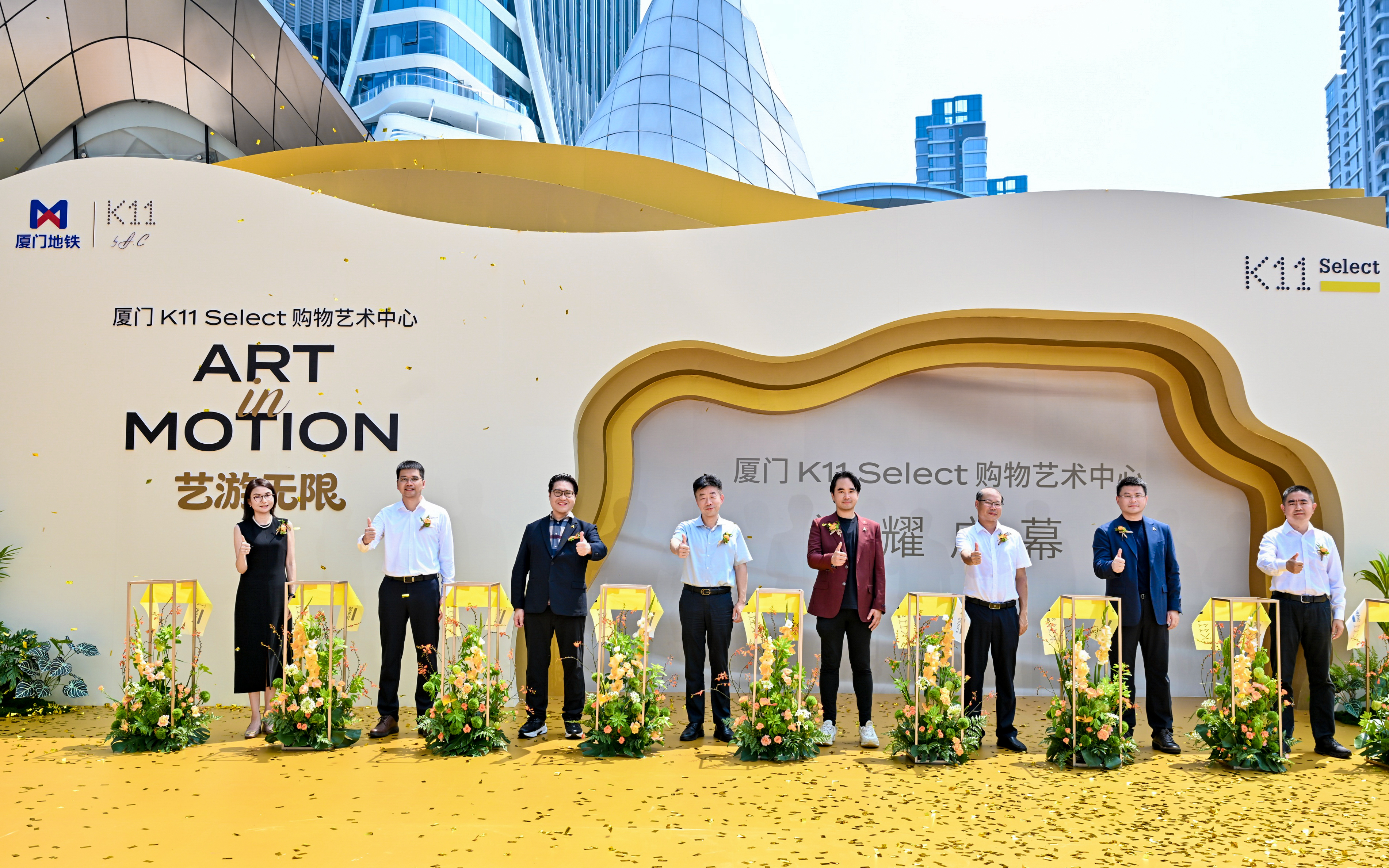
Its location beside Wuyuan Bay Wetland Park is central to the concept.
Rather than treating the surrounding natural environment as something separate from the commercial development, the project aims to connect the two.
Working with Xiamen Metro, the project redesigned the station itself, along with underground walkways, car park structures and even bus stops, turning them into art-filled public spaces that lead straight into the wetland. Local animal conservation groups are also part of the development.
Cheng describes this next stage of his vision as a Cultural Tourism District, or CTD, expanding the original cultural commerce model into a broader approach to urban living.
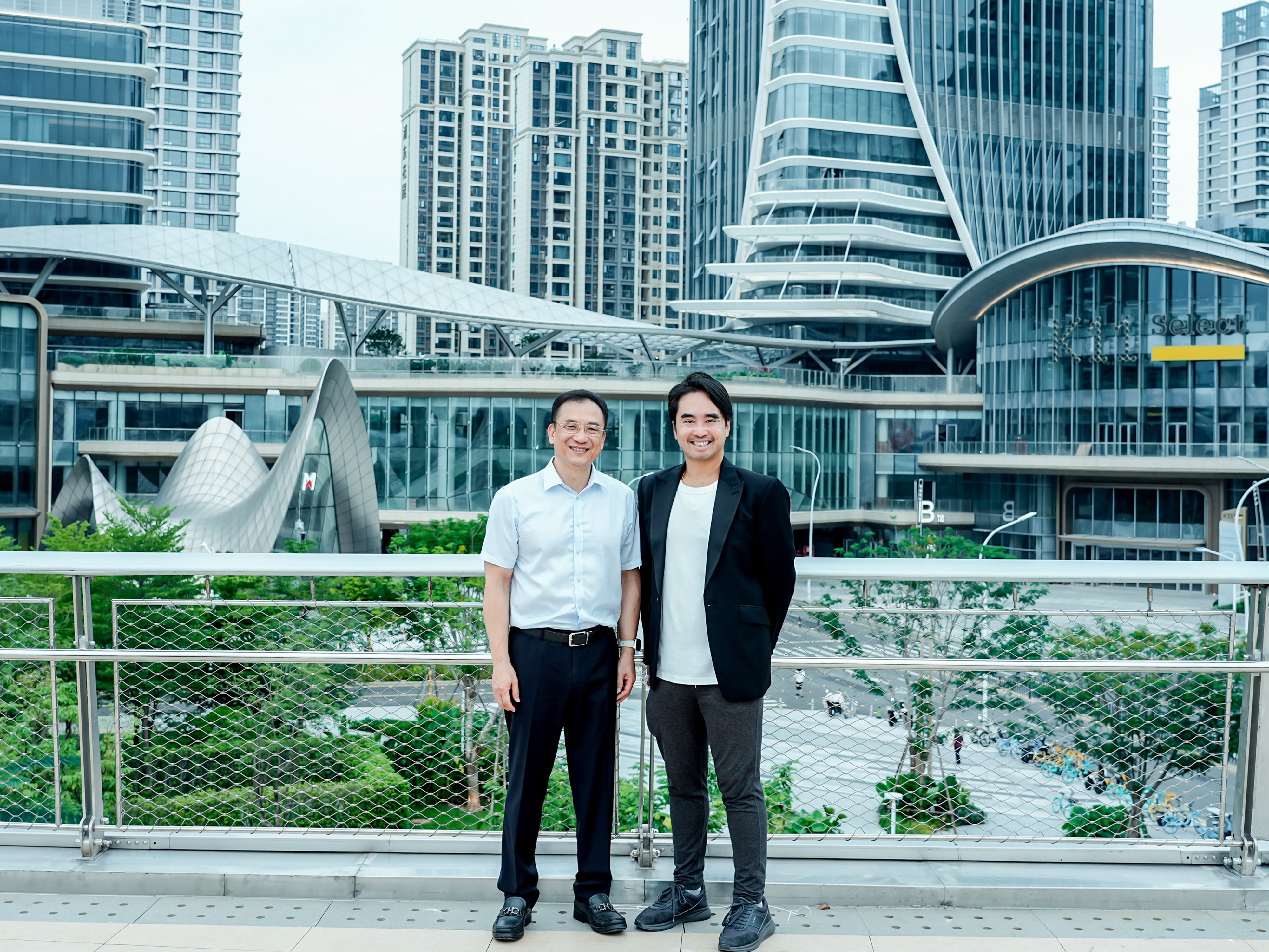
Of course, the art is still very much part of the experience.
For its opening, Xiamen K11 Select introduced an exhibition by British contemporary artist Philip Colbert, whose signature lobster character appeared in a surrealist-inspired installation, including a giant 10-metre inflatable lobster outdoors near the wetland.
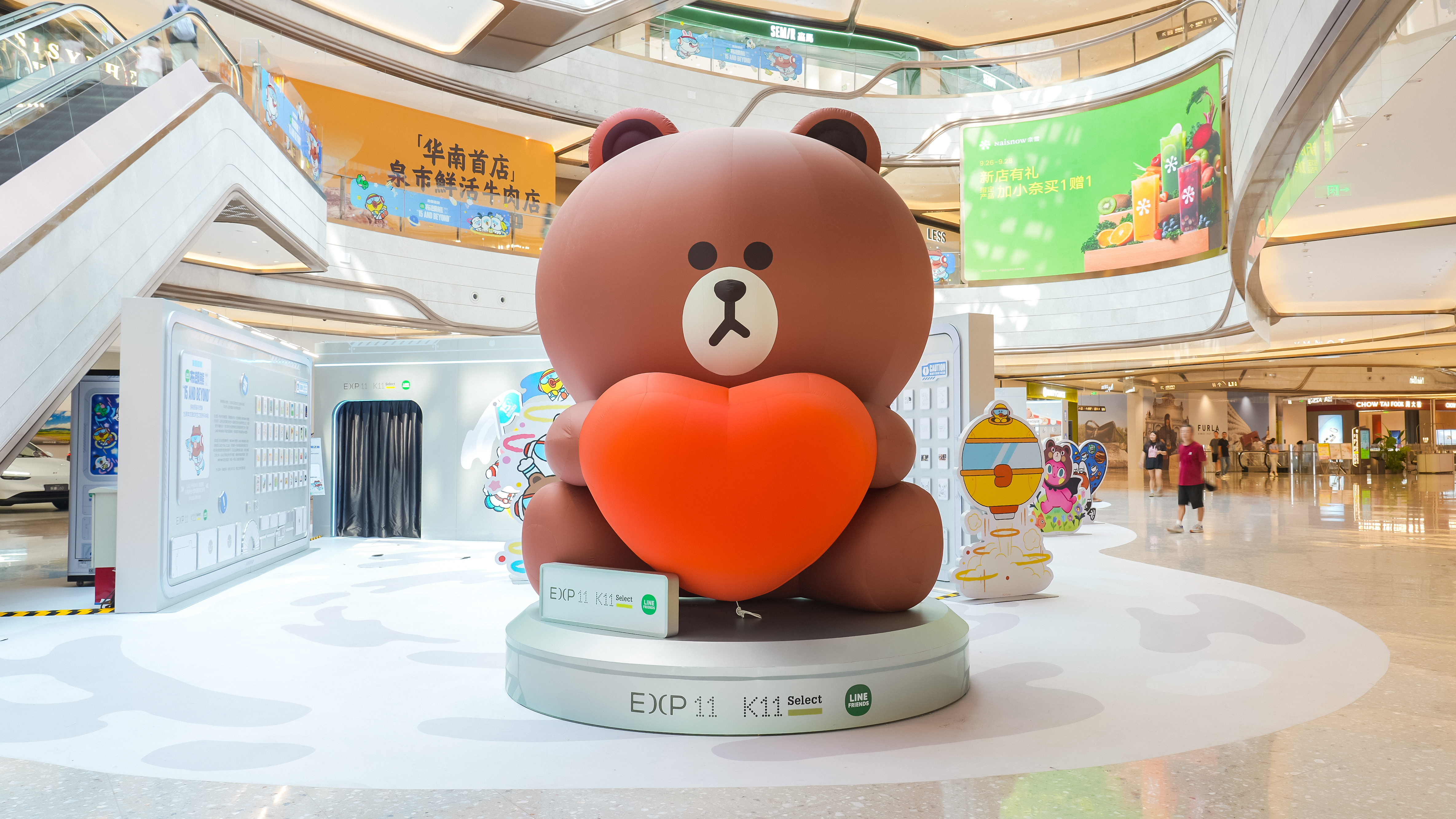
The venue is also hosting the global premiere of "BROWN: 15 AND BEYOND," featuring over 8 invited global contemporary artists who reimagined LINE FRIENDS' beloved BROWN character.
It's the kind of cultural combination that has become increasingly familiar in Cheng's model: international contemporary art, globally recognizable characters, and everyday lifestyle experiences sharing the same space.
Only this time, visitors can step outside and find themselves surrounded by nature.
Why the future of shopping might be about more than shopping
The retail industry has spent years trying to answer a difficult question: how do you convince people to visit physical stores when so much can be purchased online?
Discounts and exclusive products can attract shoppers, but they don't necessarily give people a reason to spend an entire afternoon somewhere.
Art exhibitions, public spaces, cultural events, and accessible green areas offer a different kind of attraction.
Someone might visit Xiamen K11 Select for the BROWN exhibition, stay for lunch, discover a new fashion brand, and finish the afternoon walking through the nearby park.
For Cheng, Xiamen K11 Select also marks another step in a career built around challenging the conventional boundaries of commercial real estate.
What started in Hong Kong as an experiment combining art galleries with retail has gradually expanded into a wider conversation about architecture, culture, urban development, and how people spend time together.
It offers an interesting alternative to the familiar formula of more stores, more promotions, and more reasons to spend.
After all, if a shopping mall can convince people to visit for art, stay for culture, and leave with a walk through nature, it has already achieved something rather unusual.
It's given people more reasons to come, and more reasons to stay.
See the original on Instagram → @chinainsider