Adidas Maps a Three-Stripe Running Route Across Shanghai's Wutong District to Launch HYPERBOOST
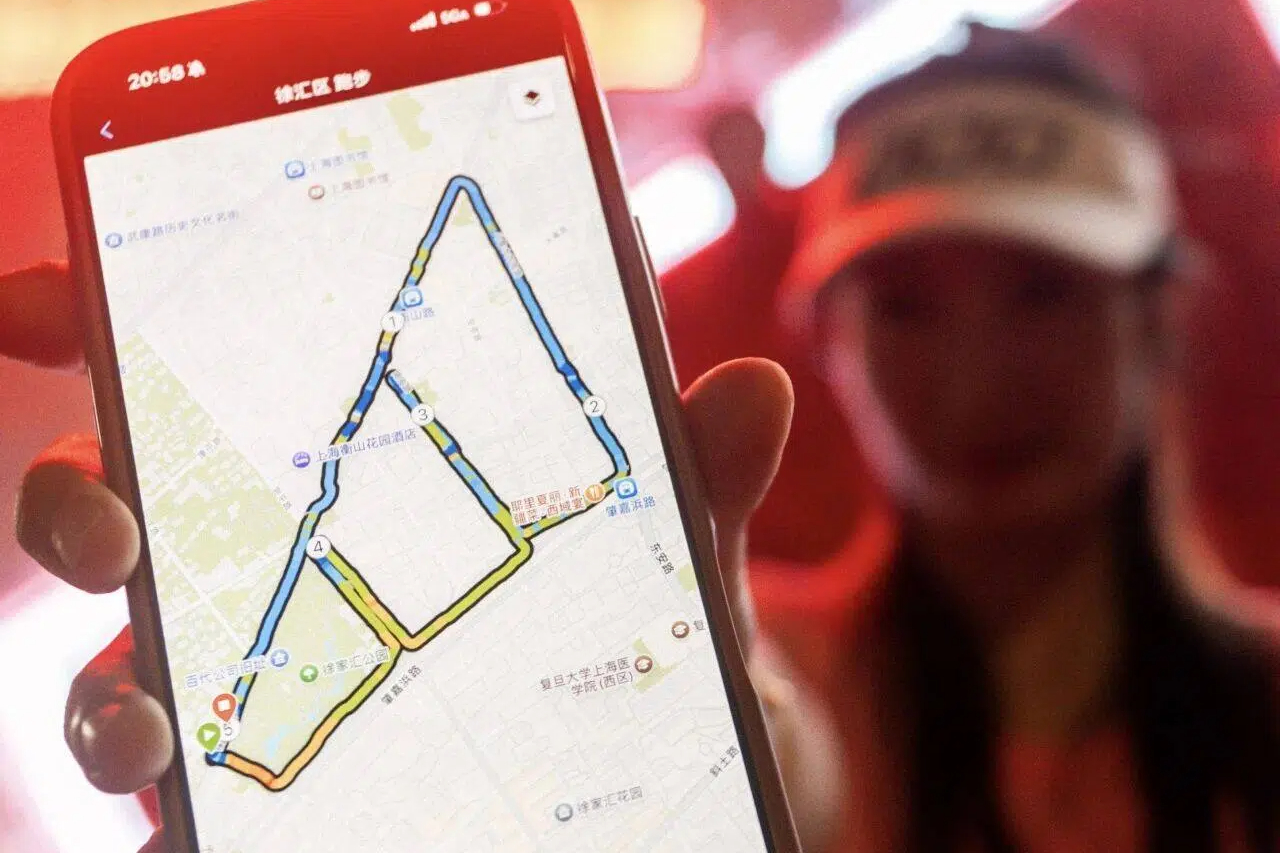
Adidas routed a Shanghai night run across three streets to trace its three-stripe logo, tying HYPERBOOST's Tmall launch to six local neighbourhood businesses.
Adidas launched a pop-up campaign in Shanghai around its new HYPERBOOST shoe series, running from 8 to 16 August, with a Tmall Super Brand Day release spanning 13 to 19 August. The centrepiece concept draws on running-app route-sharing pages: a mapped course departing from Xujiahui Park and crossing Hengshan Road, Wulumuqi South Road and Zhaojiabang Road traces the shape of the brand's three stripes across the city's Wutong neighbourhood.
Six local businesses served as nodes along the route: café HEY BARISTA, lifestyle store 念叁, restaurant BRICK LANE, bakery FOLDER BAKERY, dumpling shop 洋洋锅贴 and creative studio WOLF REALITY. On the evening of 15 August, approximately 200 runners and guests joined a night run, grouped by pace — low, medium and high — and equipped with light-up gear to render their tracks visible. Distances were 3 km and 5 km. A market and music party followed. 念叁's Hengshan Road store simultaneously displayed all three HYPERBOOST silhouettes — EDGE, LITE and EUPHORIA — for visitors to try on.
An online route check-in challenge extended the campaign to Beijing, Guangzhou, Chengdu and Hong Kong, with corresponding local routes or neighbourhood markets. The HYPERBOOST line itself has been rolling out since March 2026; Runner's World awarded it a "Best Super Training Shoe" designation. Stand-up comedian Zhang Jun provided a campaign quote: "Skaters dressed as runners, dancers dressed as runners, creatives dressed as runners — but once you put on the HYPERBOOST, even the dressing-up becomes real."
The campaign reflects a maturing playbook for performance footwear launches in Chinese cities: rather than staging a standalone brand event, the activation is embedded in an existing neighbourhood identity — the Wutong area's café and lifestyle cluster — and uses a running-app mechanic that the target audience already understands. The route-as-logo conceit does promotional work both on the ground and in shareable screenshots, bridging offline participation with the online check-in challenge across four additional cities.