A Wenzhou Bookstore Turned China's Humble Street Desserts Into a Museum-Worthy Exhibition
In most of China, summer means one thing: sugar water. Not the literal translation that trips up English speakers.
In most of China, summer means one thing: sugar water.
Not the literal translation that trips up English speakers. In Cantonese,
tong sui
(糖水) describes an entire universe of sweet soups, chilled broths, and syrupy bowls — a category so woven into daily life that it's less a dessert and more a weather-dependent instinct. When the humidity clings and the temperature climbs, you reach for what cools.
Now one small bookstore in Wenzhou has turned that instinct into a full-scale exhibition.
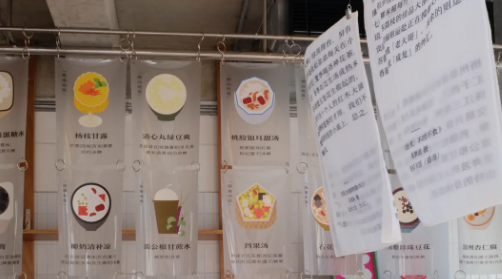
盘菜生 (Pancaisheng), an independent bookstore that lives inside a produce market, is running "Sweet Summer Records: A Geography of Chinese Sweetness" through August 31. The show maps China not by province or dialect, but by its street-level sugar waters — 54 of them, illustrated and hung like laundry from light fabric curtains that sway with the breeze.
The exhibition is structured in three chapters: a history of sweetness and sentiment, a summer route map across the country, and a hands-on sugar-water experimentation lab. The visual centerpiece is a curtain of illustrations — mung bean soup from northern street stalls, mango pomelo sago from Cantonese dim sum parlors, and dozens of regional variations in between — strung together so visitors walk through them as they move through the space.
What makes this more than a novelty is the bookstore's location. Pancaisheng sits inside a wet market, and its glass windows look directly onto bustling produce stalls. The exhibition doesn't hide this — it frames the market outside as part of the show. The vegetables being traded, the ingredients in motion, become a live demonstration of what the sugar waters are made from. The boundary between exhibit and existing world dissolves.
Opening day brought together the curator, an architect, and a filmmaker, each sharing their own sugar-water memories — the taste of a particular summer, a specific hometown stall, the cold bowl their grandmother made. A music podcast host contributed a collaborative summer playlist, extending the theme into sound.
The exhibition saves special attention for Wenzhou's own almond tofu (杏仁腐), a chilled almond-flavored jelly that functions as a kind of local edible time capsule. Through vlog-style video, the show traces how this dish evolved alongside China's modern food industry. On weekends throughout August, Pancaisheng will sell a homemade version — "almond-flavored almond tofu," they're calling it, a name that hints at how many mass-produced versions have drifted from their ingredient origins — and run workshops for those who want to learn to make it themselves.
A bookstore in a market, an exhibition about sugar water, curtains of dessert illustrations swaying next to vegetable vendors — it's the kind of project that could only make sense on its own terms. And that's precisely why it works.