A $0.25 flop became China's box-office sleeper hit — and brands went feral chasing it
It opened in theaters and made 169 yuan — about 23 US cents — across its first nine days. No official account, no trailer, no poster.
It opened in theaters and made 169 yuan — about 23 US cents — across its first nine days. No official account, no trailer, no poster. By mid-August, the animated film 《牛来》 ("Niu Lai") had crossed 10 million yuan and cracked the top 10 for domestic animated films of 2026.
The reason is exactly what you'd guess: it is spectacularly bad in a way that feels almost impossible to fake. A director with no film-industry background and a mother who hand-drew the thing over roughly five years produced something so crude — janky animation, stuttering camerawork, the visual polish of a first-week Flash tutorial — that it looped all the way back around to fascinating. Screened on a professional cinema system, the contrast between the shoddy frames and the theater's equipment became the joke itself.
Word spread organically, and the internet did what the internet does. Theaters, caught without any official marketing assets, started writing posters by hand. Viewers began booking seats in the shape of the Chinese character 牛 ("niu," cow), bringing their own homemade banners and props. One running gag: only the worst artist in the entire theater could capture "that smell" of the film properly.
Then the brands arrived.
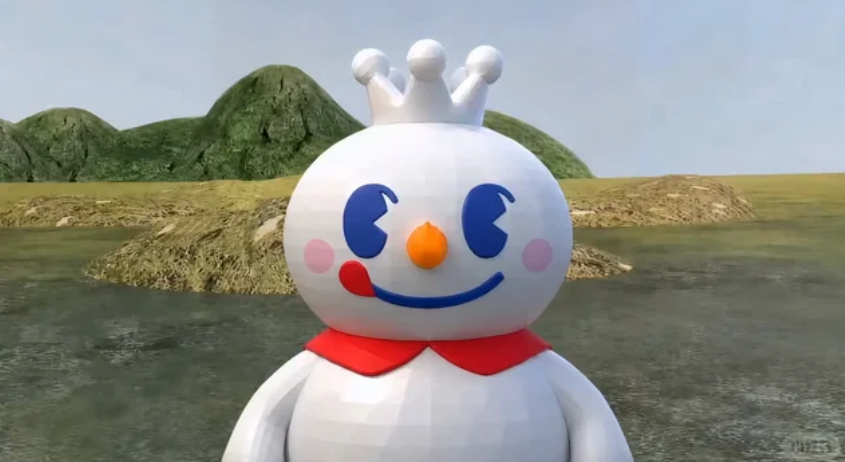
Mixue Ice Cream & Tea — whose mascot Snow King already runs one of the fastest-moving accounts in Chinese F&B — was first, dropping its own lo-fi parody short on the 16th. The internet's reaction was telling: "If you're offline for even a little while, you won't understand what Snow King is doing," one commenter joked. Another jabbed that Snow King's "pixels are still too high — it didn't capture the essence."
Yili, Chunjuan, and Haitian followed, each recreating the film's signature "looking for mom" scene with their own twist — drinking milk to calm down, seasoning the moment with sauce — all while politely plugging their products. The imitations got progressively more absurd, which is exactly the point.
What makes this worth watching for marketers is the lesson sitting underneath the chaos. Everyone in China's brand world now agrees that the 《牛来》 breakout was essentially unrepeatable — five years of a no-budget mother-and-son project can't be reverse-engineered into a strategy. But the response to it can be taught: when a genuinely unpredictable meme surfaces, the brands that win are the ones that can move within a day, match the joke's energy instead of polishing it, and — crucially — tie the gag back to what they actually sell.
That's the skill nobody can fake either. A brand that's "chronically offline" doesn't just miss the window; it shows up late with a high-res, focus-grouped version of a joke that only worked because it was ugly. Mixue got the timing, the tone, and the product all in one shot. The trick isn't being silly. It's being silly fast.